
Hard to Find Winter Bloomers
Wintersweet
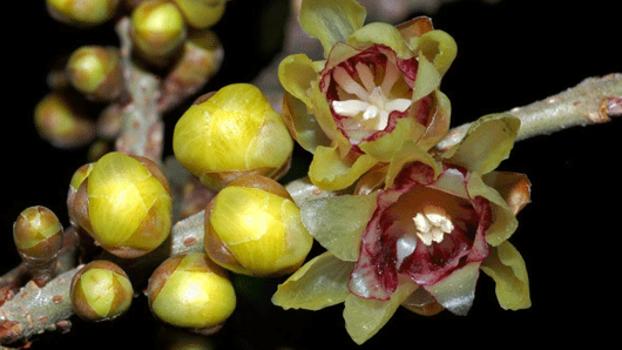
Wintersweet: Chimonanthus himonanthus praecox
This is the only species widely grown for its spicily scented mid-winter flowers. Like the Dawn viburnum, it doesn’t stand out in the garden in the winter but has a wallop of a scent.
The unique flowers are lovely in flower arrangements as cut flowering branches, and can also be forced as with forsythia. The petals are thick, cream colored and waxy when you touch them. The plant prefers medium sunlight or high dappled shade.
White Forsythia

White Forsythia: Abeliophyllum distichum
There is only one species in this Korean genus. Although it belongs to the same family as the common forsythia, there is nothing common about this plant.
It is an open, spreading shrub that grows to 3-5 ft. wide and produces lots of fragrant, pure white, star-shaped flowers at the very beginning of spring about two weeks before forsythia.
The blooms are followed by foliage of a cool bluish green. Branches can be cut in late winter and easily forced into bloom. The perfume of the flower is much stronger when you bring it indoors.
Grow in full sun or partial shade and average soil. You can plant a few early bulbs underneath, like Muscari or crocus, for a nice little ensemble!
“Dawn” Viburnum
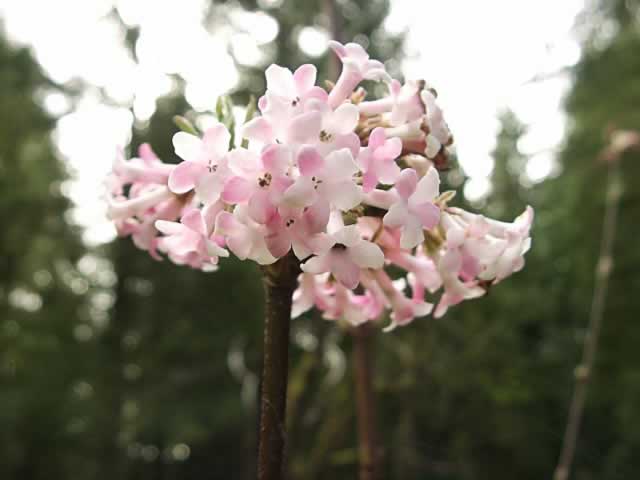
Dawn Virburnum: Virburnum bodnantense
This viburnum was developed in North Wales in 1934. It is know for its extremely fragrant flowers in cold winter climates as far west as St. Louis. Flowers bloom on woody branches that are pretty common looking. This makes it easy to pass up unless you smell its scent.
It gets 8-10 feet tall. New leaves are a bronze tint in the early spring, turn deep green in the summer, then red in the early fall.
In the early fall, you get another feature with the berries. Old flowers turn to red berries and then to black berries in the fall.

Christie lives in Manakin Sabot , Virginia where she manages a 3 acre garden. Her blogs are written from her 35 years as a personal and professional gardener.
Leave A Comment