
The ‘Invasive Plant List-
Some Additions that May Surprise You
Every once and a while my husband hands me an article from the New York Times or Washington Post that has great ideas for my blog. The one he most recently pointed out, however, made me grimace and feel a twinge of guilt.

Vinca minor
Native Plants vs. Invasive Plants
Before getting to the new list of Invasive Plants, let’s review the terms ‘Native’ and ‘Invasive’ as they relate to our ecosystem.
‘Natives’ naturally occur in a certain ecosystem and have grown there for thousands of years. These plantshave adapted to the climate, soil type, geology and hydrology of the area. They benefit the area’s established ecosystems which includes other plants, animals, birds and insects.
‘Invasive’ species include plants, animals or microbes that are brought from other countries. Once introduced in the environment they can spread rapidly. Their rapid growth causes harm to the ecosystem, economy and/or human health. They often lack natural predators or controls in their new environment. This allows them to out compete native species for resources.
It’s critical on a larger conservation scale to go from a reactive stance , namely weeding invasives out, to proactively not planting them at all. Twenty invasives which were deemed illegal to be grown in 2021 are still being sold. Most of the ones listed below , the ‘new’ ones, are still sold for the most part.
Vinca minor or periwinkle– This is used often an evergreen ground cover. In the spring its blue bloom is lovely. Vinca major with the bigger leaf is long know to be invasive.


Nandina domestica ( not the hybrids) also known as ‘Heavenly bamboo’


Butterfly bush!

Crape myrtle

Mimosa trees-hummingbirds love!


Garlic mustard-you may see this in your lawn and garden beds.


Asian honeysuckle


Japanese Stiltgrass- I hate this stuff!
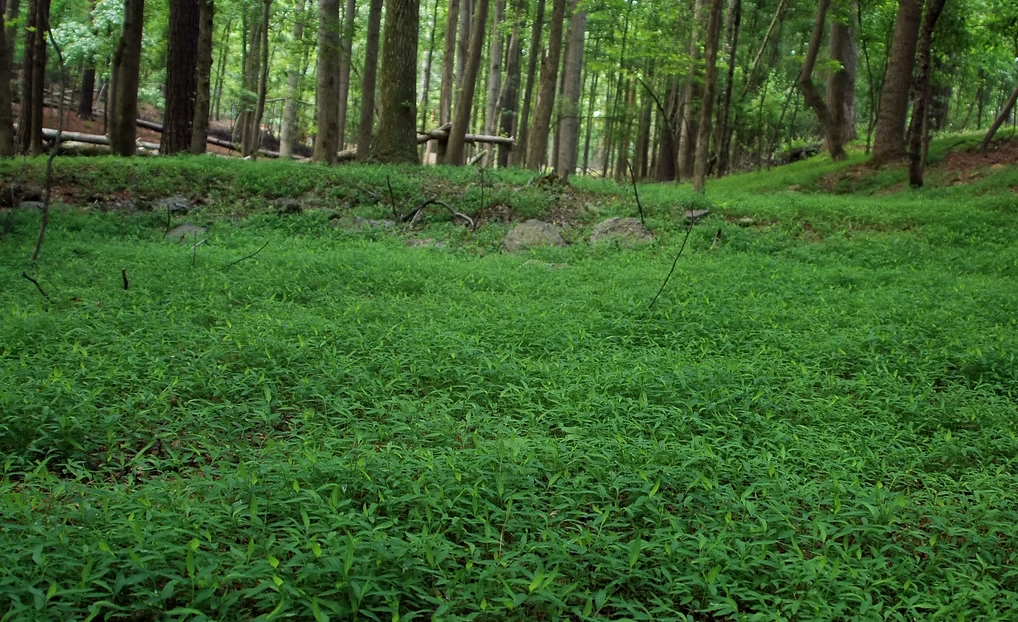

When I think back to my decades of weeding, I remember how many of these very plants I pulled up in gardens over the years, and how they repeatedly grew back. For most part, I would not have labeled them as invasive, but they were!
Moving forward avoid planting these plants, and control their spread in your garden at the very least. A good rule of thumb is to have at least 50% to 70% Natives in your garden to staunch back the non-native plants negative effects. As you toil away weeding, think of your self as a champion for your ecosystem. I know its a small scale but really important one to do your part for your environment.


Christie lives in Manakin Sabot , Virginia where she manages a 3 acre garden. Her blogs are written from her 35 years as a personal and professional gardener.
Leave A Comment